Faster mining intelligence. Better targeting. Broader coverage across Africa.
Access AMIQ now →Get full access to Africa's mining project intelligence and start targeting live projects across the continent.
Not a subscriber yet? Join today →Faster mining intelligence. Better targeting. Broader coverage across Africa.
Access AMIQ now →
Uranium mining in Africa
Uranium mining in Africa typically yields only about one kilogram of uranium for every 1 000 kilograms of uranium ore, and the continent still ranks among the world's more significant sources of the metal. Africa Mining IQ tracks the mines, projects and owners behind that supply, giving engineers, equipment suppliers and service firms a way to reach decision-makers while a project is still being scoped.
Used by processors, equipment makers and service firms working in African uranium.
A metal discovered by accident, mined with purpose
From a cloudy photographic plate to a global industry
The history of modern uranium is relatively new, as the radioactive properties only became known in the 1890s, when Antoine Henri Becqerel left a sample of uranium on top of a photographic plate. This marked the first discovery of “rays” or “light” emitted from uranium, as the plate became cloudy overnight.
Uranium, a silvery-grey metal, is a chemical element which is weakly radioactive, and is formed only in supernova explosions. Uranium is 40 times more abundant than silver, and 500 times more common than gold, and is present throughout the earth’s crust as a component of most rocks, soils, rivers and oceans.
From ore to yellow cake
Gold and uranium mining in Africa is typically accomplished together, as both methods process large amounts of rock for small yield quantities. Ore-containing uranium is crushed and leached in a uranium mill, where the uranium concentrate “yellow cake” is formed. Uranium mining in Africa typically yields only about one kilogram of uranium for every 1 000 kilograms of uranium ore.
Reserves of uranium are calculated according to its recoverability out of these materials at a cost of less than US$ 130 per kilogram. Some regions, such as Kazakhstan, Canada and Australia, have higher parts per million, while uranium mining in Africa is dependent on about 888 400 tonnes of reserve across the continent.
Put your business in front of Africa's uranium operators
Nuclear-fuel buyers, processing plants and mine equipment firms all need a way into a market that is small, technical, and tightly held. AMIQ opens that door by naming the mines, owners and consultants behind every uranium operation on the continent.
Get past the gatekeepers
Uranium licensing and radiological compliance keep the circle of decision-makers small. AMIQ names them directly.
Follow gold-uranium co-production
Because so much African uranium is mined alongside gold, AMIQ tags the commodity mix so you know exactly which operations to approach.
Position for the coming demand curve
With buyers like Areva already scouting new processing capacity, the firms tracking projects now will be first in line as output grows.
What a uranium listing looks like inside AMIQ
Every uranium listing tells you:
- Whether the operation is still exploring, milling, or fully operational
- Whether uranium is the primary target or a co-product of gold mining
- The listed operator holding the mining right
- Which engineering and study houses are already appointed
- The district and licence status of the ground it sits on
- Paid members get the named contacts and capital figure behind the lock
The Witwatersrand Basin and Africa's uranium producers
Up to 2009, 27% of the total 50 572 tonnes of uranium ever mined came from Kazakhstan. Canada, Australia, Namibia, Russia, and Nigeria are also considered major producers of uranium. Currently, uranium mining in Africa by the countries Niger, Namibia and South Africa produce 18% of the world’s demand of the metallic chemical.
A main centre for uranium mining in Africa is focused along the Witwatersrand Basin, which also holds the world’s largest gold reserves. Here, uranium is found in Precambrian quartz-pebble conglomerates in the Brakpan and Krugersdorp regions. Uranium mining in Africa is viable with these quarts-pebble conglomerates, as deposits are low grade, but characterised by high tonnages.
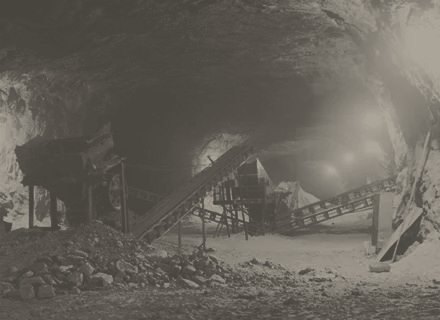
AngloGold Ltd is a key figure in uranium mining in Africa, owning an underground mine with an average annual output of 674 tonnes. Currently, the largest project for uranium mining in Africa is the Randfontein mine in Gauteng, also known as the Ezulwini project. Established in January 2007, the mine has an inferred uranium output of 83 969 tonnes.
Possessing major reserves, uranium mining in Africa – in 2005 – increased production by 7% from the year 2000. Taking figures from 2009 into account, the steady increase in output shows that with demand increasingly outstripping supply, uranium mining in Africa has a bright and productive future, as this vast resource is still largely untapped.
Future projects involving uranium mining in Africa include one of the world’s largest suppliers of nuclear fuel, Areva, setting up a uranium processing plant in the Karoo region – establishing an even bigger market for uranium mining in Africa as a buyer of processed ore.
Explore mining across the continent
Keep reading on the countries and commodities that sit alongside uranium in Africa Mining IQ's coverage.
Uranium mining in Africa: common questions
How much uranium comes from a tonne of ore?
Uranium mining in Africa typically yields only about one kilogram of uranium for every 1 000 kilograms of uranium ore. The ore is crushed and leached in a uranium mill, where the uranium concentrate known as “yellow cake” is formed.
Which African countries produce the most uranium?
Niger, Namibia and South Africa are the major African producers, together accounting for 18% of the world's uranium demand. South Africa's production centres on the Witwatersrand Basin, where uranium occurs alongside the world's largest gold reserves.
What is the Witwatersrand Basin's role in uranium mining?
The Witwatersrand Basin, covering the Brakpan and Krugersdorp regions, holds uranium in Precambrian quartz-pebble conglomerates alongside the world's largest gold reserves. The deposits are low grade but characterised by high tonnages, which is what makes them viable to mine.
Is gold and uranium mining linked in Africa?
Yes. Gold and uranium mining in Africa is typically accomplished together, as both methods process large amounts of rock for small yield quantities. AngloGold Ltd, for example, runs an underground mine with an average annual uranium output of 674 tonnes alongside its gold operations.
What is the outlook for uranium mining in Africa?
With demand increasingly outstripping supply, uranium mining in Africa has a bright and productive future, as this vast resource is still largely untapped. Future projects include a uranium processing plant that Areva, one of the world's largest suppliers of nuclear fuel, is establishing in the Karoo region.