Faster mining intelligence. Better targeting. Broader coverage across Africa.
Access AMIQ now →Get full access to Africa's mining project intelligence and start targeting live projects across the continent.
Not a subscriber yet? Join today →Faster mining intelligence. Better targeting. Broader coverage across Africa.
Access AMIQ now →
Coal mining in South Africa
When the country needs power, it burns coal. The seam feeds roughly three-quarters of Eskom's generation and, through Sasol, about a third of the nation's liquid fuel. AMIQ keeps 135 live coal projects on the board, stretching from the Highveld collieries up to the Waterberg, and pairs each project with the decision-makers who put their signature on the order. Reach them while the spec is open and the job is there for the taking.
135 South African coal projects on the live map
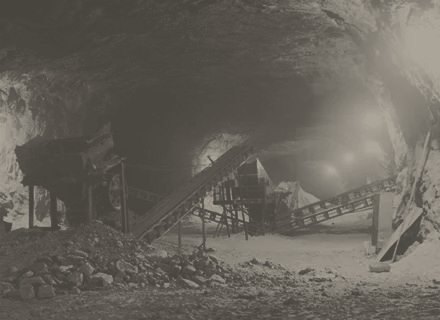
The way South African coal reaches the surface
Every load begins underground and finishes at a furnace. The country splits its mining almost evenly between open pits and underground workings: shallow ground is stripped by dragline and truck-and-shovel, while the deeper seams are cut by continuous miner. What comes up is destined for an Eskom boiler or a Sasol plant, and not one of those operations runs without outside suppliers. AMIQ watches the projects in motion so you can spot where the next contract is forming.
Around eMalahleni (Witbank), the Highveld sits on close to 60% of the nation's coal deposits, with the central Highveld alone home to roughly 31% of all the country's collieries. No other field comes close, which is why this is where South African coal really lives.
Explore →Up in Limpopo, the Waterberg is where the country's coal future is being staked, sitting on a sizeable slice of what reserves remain. Once the older Highveld seams run down, the long-life mines opening here are set to carry the next surge of work for suppliers.
Explore →About one in two South African collieries digs from the surface, while the other half follows the seams below ground. Because the split runs so close to even, the spread of work stays wide, taking in everything from bulk earthmoving and draglines to shaft sinking, conveyors and continuous-miner crews.
Close to 75% of the fuel Eskom burns to generate is coal, and the mineral covers roughly 77% of the country's primary energy overall. The deals to keep power stations fed, and the collieries that feed them, hold down a dependable stream of work for years on end.
Through its coal-to-liquids route, Sasol converts coal into roughly 35% of the liquid fuel South Africa uses. The Secunda complex behind it draws on a constant flow of mining, materials-handling and processing-plant suppliers right along the chain.
Between them, Anglo American, Sasol Mining, Glencore, Exxaro and South32 account for around 85% of the coal mined in South Africa. Whenever they open, expand or sell a mine, supplier demand across the coalfields shifts with them.
Explore →Get ahead of South Africa's coal tenders
Take out a subscription and all 135 coal projects on AMIQ open up, each attached to the checked owner, engineer and EPC names that settle who supplies a job. See which projects are moving, work out exactly who to phone, and land on their radar before the tender closes.
How the coal mines divide across the fields
Most of the nation's coal is packed into just a few fields. Witbank and the central Highveld hold the densest cluster of mines today, while the Waterberg banks the long-life ground for the decades ahead. The split below shows where the collieries actually sit. Behind each entry on the platform you will find its place, phase, owner and checked contacts, so you can act on the ones that count.
How coal contractors land the next contract
Bulk earthmoving, materials handling, draglines, washing and processing plant, rail, logistics, equipment hire: whatever the trade, the same two things decide a coal job, which project is actually moving and who is holding the pen on it. AMIQ hands you both well ahead of the tender being advertised.
In the room when the spec is written. Filter on scope, phase and location to land on a project while its requirements are still taking shape, well before it ever reaches a public tender list.
The right desk, first time. Contact the colliery owner, the project engineer, the EPC and the firms already on site by name, every record checked and refreshed by our researchers.
Catch every shift in the pipeline. A text or an email reaches you as soon as a fresh coal project surfaces or a current one steps to a new phase, so nothing gets past you while you are out on a job.
No field left out. Starting at eMalahleni and Ermelo and running up to the Waterberg, the tracking traces the seams themselves and the operations working each one.
Made for the firms collieries hire. Earthmovers, materials-handling crews, dragline operators, wash-plant and processing-plant builders, rail and logistics providers and equipment houses all turn to AMIQ to line up their next coal customer.
Everything in one window. The full set of 135 coal projects lives in one searchable platform, sitting inside a wider library that runs past 560 across South Africa and beyond 2,200 spanning the rest of Africa.
South Africa: the engine room of African coal
For well over a hundred years coal has carried South Africa, and that has not changed. Annual output tops 250 million tonnes, somewhere near 90% of all the coal raised across the continent, and the bulk of it surfaces on the Highveld around eMalahleni (Witbank). Take coal out of the picture and the country goes dark.
Demand is anchored by two heavyweights. Roughly 75% of what Eskom generates comes from coal, while Sasol's coal-to-liquids plants convert the mineral into about 35% of the nation's liquid fuel. Together they keep mining and supply work ticking over season after season, and beneath that machine sits an estimated 30 to 53 billion tonnes of reserves, enough to last something like 200 years at today's pace. To feed it, the coal mining companies keep sinking and enlarging mines.
It is the headline projects that keep the wheels turning. Mafube Colliery, among the country's biggest, sits beside the New Largo development earmarked to supply Kusile, and as each advances it draws in earthmoving, plant and logistics work. The supplier's question never changes: which coal projects are running, what phase have they reached, and whose number do you dial. Answering that for mining services firms is precisely why AMIQ exists, with capital values and checked contacts released to subscribers.
Where the provinces fit into the coal map
Three provinces share the coal, and each plays its own role: Mpumalanga's Highveld carries today's tonnage, Limpopo's Waterberg banks the reserves for what comes next, and the Free State keeps Sasol's older plants supplied. Every one of them runs a live pipeline of its own.
Mpumalanga
This is the centre of gravity for South African coal, reaching from the Witbank coalfield at eMalahleni across to Ermelo. A thick cluster of mines and mining-services firms keeps Eskom's stations and Sasol's Secunda plant in supply.
Explore →Limpopo / Waterberg
Holding a large portion of the reserves still in the ground, the Waterberg is where South Africa's coal expansion is headed. The long-life mines being opened here will carry the coming wave of mining and logistics work.
Explore →Free State / Sasolburg
Coal near Sasolburg supplies Sasol's longer-standing synfuels and chemicals works. Demand from these southern fields holds firm for materials-handling, processing and plant-maintenance suppliers.
Explore →Explore coal mining in South Africa
Look further into the country's coal industry and the companies, regions and supply chains that surround it.
Coal mining in South Africa: supplier questions answered
How many coal mining projects are there in South Africa?
There are 135 live and planned coal projects on the Africa Mining IQ platform for South Africa, sitting within a national library of over 560 projects. They cover the whole life cycle, from exploration and brand-new collieries to producing open-pit and underground mines, and are spread across the Highveld, Ermelo and the Waterberg.
Where is coal mined in South Africa?
The Highveld supplies the lion's share, with the Witbank coalfield at eMalahleni and the central Highveld together holding about 60% of national deposits. Ermelo further south and the Waterberg in Limpopo, the big frontier for the years ahead, account for most of what is left, with smaller fields near Sasolburg filling in the balance.
What is South African coal used for?
First and foremost, it keeps the country running. Coal makes up around 75% of Eskom's generating fuel and roughly 77% of primary energy, and Sasol's coal-to-liquids plants convert it into about 35% of South Africa's liquid fuel. Whatever is left over heads for export or goes into steel, cement and similar industries.
Who are the biggest coal mining companies in South Africa?
Five names, Anglo American, Sasol Mining, Glencore, Exxaro and South32, mine close to 85% of the country's coal between them. The mines they run, the expansions they greenlight and the assets they sell off all move supplier demand across the coalfields, from the Highveld up to the Waterberg.
How can suppliers find new coal mining projects in South Africa?
The way to get there ahead of the field is to spot a coal project before its requirements are locked down, and that is what Africa Mining IQ is for. Every entry shows the scope, the phase and the location, together with the checked owner, project engineer and EPC names. The platform pings you by text or email the instant a coal project is newly logged or an old one is amended.
How much coal does South Africa produce?
Yearly production runs past 250 million tonnes, which works out to roughly 90% of everything Africa digs. Sitting on reserves put at 30 to 53 billion tonnes, near 200 years' worth at the current rate, coal stays the foundation of the national energy economy and a dependable wellspring of work for suppliers.