Faster mining intelligence. Better targeting. Broader coverage across Africa.
Access AMIQ now →Get full access to Africa's mining project intelligence and start targeting live projects across the continent.
Not a subscriber yet? Join today →Faster mining intelligence. Better targeting. Broader coverage across Africa.
Access AMIQ now →
Gold mining in South Africa
Nowhere on the planet has chased gold further down or for longer than this country, from the Witwatersrand reefs to the working rock a few kilometres beneath Mponeng. Across that ground AMIQ keeps a live record of roughly 90 gold projects, every one of them named to the owner, engineer and EPC who hold the budget. We capture each project while the scope is still being written and the contracts are not yet awarded. To a supplier, arriving that early decides who quotes.
Around 90 live gold projects mapped the length of South Africa
The different ways gold gets out of the ground here
Lifting gold from the Witwatersrand can mean a shaft driven kilometres down, a shallow surface or combination pit, or the newer trade of winning metal back from generations of stockpiled tailings. No two of those routes hire the same kind of contractor, and AMIQ tracks the live projects running in each.
No gold resource on record rivals the Witwatersrand Basin, the source of close to 40% of all the gold ever brought to surface. First struck at Langlaagte in 1886, it remains the backbone of deep-level production stretching from Gauteng south into the Free State.
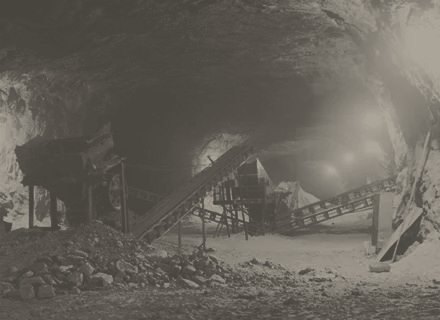
Explore →The greater share of the country's gold is taken from underground, Mponeng among them, the world's deepest mine at over four kilometres down. Working at that depth keeps a steady pull on specialised plant, ventilation, hoisting and engineering work.
Surface and open-pit gold sites take the shallower reefs and previously worked ground. Their buying leans toward bulk earthmoving, materials handling and processing crews rather than the deep-shaft engineering an underground mine leans on.
A few sites run surface and underground side by side, blending open-pit, shaft and reclamation in one footprint. That mix calls for a wide spread of suppliers, from the drilling rigs at one end to plant maintenance at the other.
Pulling value back out of historic dumps has become a story of its own. Far West Gold Recoveries, costed at around R12.3bn, is chasing combined reserves of 677.3 Mt holding 6.2 Moz of gold and 97.2 Mlb of uranium, which feeds sizeable processing and logistics contracts.
Between them, AngloGold Ashanti, Harmony Gold, Gold Fields and Sibanye-Stillwater account for most of the country's gold. Where their mines, expansions and retreatment work go, supplier demand across the goldfields tends to follow.
Explore →Move first on the country's gold pipeline
Subscribe to AMIQ and the full set of roughly 90 live gold projects opens up, with the verified owner, lead engineer and EPC attached to every one, so your approach reaches the buyers while the shortlist is still short.
The pipeline, phase by phase, from first drill to mothballed shaft
The country's gold projects sit at every point on the curve, from the opening drill holes on fresh ground through to producing mines and the care and maintenance that comes after. Below is the September 2024 split by phase, and each entry carries the location, stage, owner and checked contacts a supplier wants in hand before approaching.
How AMIQ puts gold suppliers in front of the work
Deep-level gold leans on a long line of suppliers, and the service providers who reach a project first are usually the ones who set the terms. Drill, engineer, test, process, supply heavy equipment or move freight, it all starts with one question: which gold projects are live and who signs off the spend.
Catch them while the scope is still being drawn. Filter by scope, phase and location to surface gold projects with specifications still open, well ahead of any public tender notice.
Go straight to the person who decides. Pull up the owner, lead engineer, EPC and sitting suppliers by name, every record verified and kept current by our researchers.
Hear about every phase shift. An SMS or email lands the instant a fresh gold project is logged or a tracked one advances a stage, so nothing quietly passes you by.
Coverage that follows the reef. The Witwatersrand and the West Rand, the Free State goldfields, the Barberton greenstone belt: every place the gold surfaces, our tracking is on the ground.
Made for the firms mines buy from. Exploration crews, drillers, engineering houses, assay labs, gold-plant builders, equipment dealers and freight operators all lean on AMIQ to land the next gold contract.
The whole goldfield in one view. Roughly 90 gold projects gather in a single searchable platform, nested inside more than 560 South African projects and a continental total above 2,200.
Why gold mining in South Africa still runs the deepest shafts on earth
Nothing has marked this country the way gold has. The reef struck at Langlaagte on the Witwatersrand in 1886 triggered a rush that raised Johannesburg from open veld and made the nation a world mining power inside one lifetime. Where coal spread itself thin across the eastern fields, gold drew the country's wealth into a single remarkable curve of rock, and the reefs early prospectors mapped across that basin still dictate where the metal comes up today.
No gold resource anywhere matches the Witwatersrand Basin, which has yielded close to 40% of all the gold ever mined. Following those reefs further and further down has stretched local engineering to the limit, with Mponeng cutting ore over four kilometres beneath the surface, the deepest mine in the world. The handful of gold producers still working at that scale hold an estimated 6,000 tonnes of reserves between them.
Today the gold mining in South Africa story leans as much on recovery as on sinking new shafts. Retreatment schemes like Far West Gold Recoveries, valued at around R12.3bn, are coaxing gold and uranium back out of dumps a century old. That pairing of the world's deepest workings with a new wave of retreatment is where the room for suppliers sits, and the capital figure on each project and the confirmed contacts behind it arrive with a subscription to AMIQ.
The goldfields, region by region
The country's gold gathers in a small number of goldfields, each one tracing a separate run of the Witwatersrand or the old greenstone belts, and each holding its own list of live projects.
Gauteng / Witwatersrand
The old Witwatersrand belt that raised Johannesburg. Deep-level workings and a thick cluster of mining-services firms are still concentrated across this ground.
Explore →Free State goldfields
Based around Welkom, these goldfields follow the same Witwatersrand reefs further south. Their long-life underground mines hold demand steady for hoisting, ventilation and engineering work.
Explore →West Rand & Far West Rand
Out west of Johannesburg lie some of the deepest, richest gold mines on the basin, together with the Far West Gold Recoveries tailings project, a heavy generator of processing and logistics work.
Explore →Mpumalanga
Home to the Barberton greenstone belt, among the oldest gold ground on earth, where high-grade narrow-reef mines call for specialised underground equipment and skills.
Explore →Explore gold mining in South Africa
Keep reading on the country's gold sector and the companies, regions and supply chains that surround it.
Gold mining in South Africa: the questions suppliers ask
How many gold mining projects are there in South Africa?
Africa Mining IQ keeps a live record of roughly 90 active and planned gold projects nationwide, sitting within more than 560 South African projects altogether. They cover the full curve, from first exploration on grassroots ground to producing mines and tailings retreatment, and run across the Witwatersrand, the Free State and the greenstone belts.
Which companies mine gold in South Africa?
The country's largest gold producers are AngloGold Ashanti, Harmony Gold, Gold Fields and Sibanye-Stillwater. Together they operate the bulk of the deep-level mines, expansion work and tailings retreatment, and their activity is what drives supplier demand right across the goldfields.
Where is gold mined in South Africa?
The bulk of the country's gold is drawn from the Witwatersrand Basin, which arcs from Gauteng out through the West Rand and Far West Rand and down into the Free State goldfields near Welkom. Off on its own is the Barberton greenstone belt in Mpumalanga, very old ground worked by high-grade narrow-reef mines.
How deep are South Africa's gold mines?
No country sinks gold shafts deeper. Mponeng, just west of Johannesburg, is the deepest mine in the world, cutting ore over four kilometres beneath the surface. Working at that depth keeps a constant pull on specialised hoisting, ventilation, cooling and engineering work.
How can suppliers find new gold mining projects in South Africa?
The way in is Africa Mining IQ, which surfaces South African gold projects early, while the scope is still open. Every project carries its location, stage and details next to the confirmed owner, engineer and EPC, and alerts by email or SMS land whenever fresh gold projects are logged or moved.
What stage are South Africa's gold projects at?
As of a September 2024 snapshot, the roughly 90 gold projects split into about 29 operational, 23 dormant or under care and maintenance, 7 bankable, 6 grassroots, 3 in execution, and 2 apiece at prefeasibility and feasibility. It is in that blend of producing mines and early-stage ground that suppliers turn up their next opening.