Big means different things in mining, and South Africa happens to hold the record in almost every category: the biggest hole, the deepest shaft, the largest single-pit coal complex, the largest platinum open pit. What is interesting is not the trivia. It is that each kind of big exists for a precise economic reason, and once you see the reason, you can predict what each mine buys, who it employs and how it dies.
What is the biggest mine in South Africa?
It depends on the measure. By pit footprint, Grootegeluk: 4 kilometres long, 3 kilometres wide, over 1,200 hectares. By material moved, Sishen, which shifted 137 million tonnes of waste in 2025 to get 25 million tonnes of product. By depth, Mponeng at about 4 kilometres. By workforce, Impala Rustenburg with around 49,000 people.
Biggest by footprint: Grootegeluk
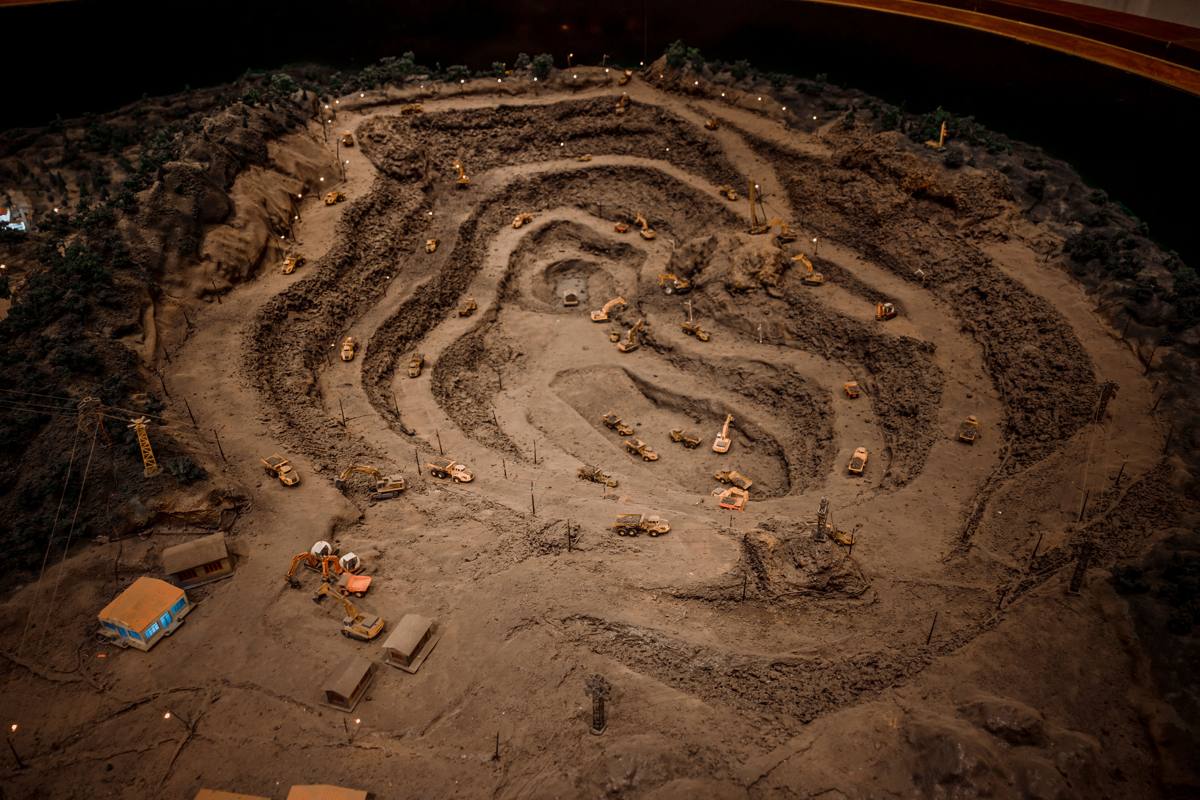
Exxaro’s Waterberg giant works one of the thickest economic coal sequences anywhere, on 13 benches, and beneficiates 8,000 tonnes of run-of-mine coal an hour through the world’s largest single-pit beneficiation complex. Around 22 million tonnes a year travel 7 kilometres by conveyor to Eskom’s Medupi and Matimba stations. Its constraint is not geology but rail: direct trains have been running at 3 to 4 a week against 11 contracted, which is why Exxaro approved another R5.2 billion expansion aimed partly at semi-soft coking coal it can truck and rail to other customers. More on the province-by-province coal picture in our coal mining in South Africa guide.
Biggest by tonnes moved: Sishen
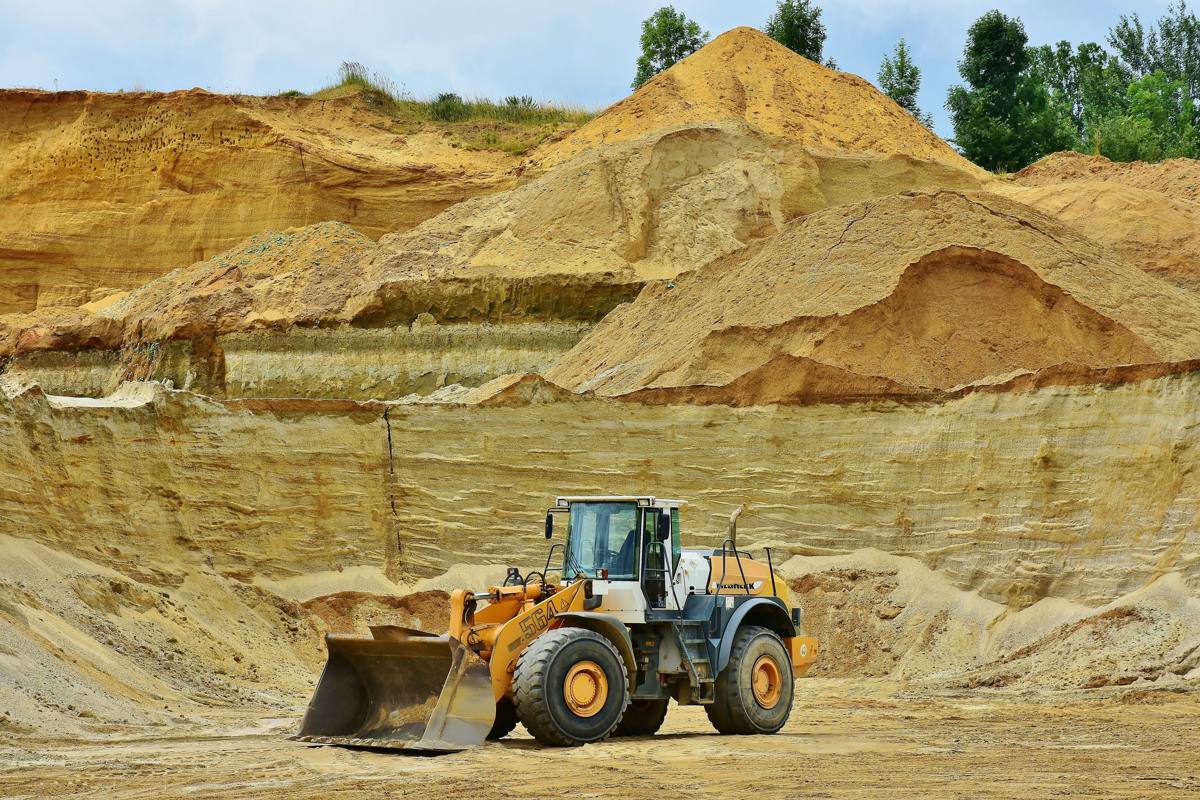
Sishen’s orebody runs 14 kilometres along strike, and mining it means moving five tonnes of waste for every tonne of ore, using 81 ultra-class haul trucks that each carry over 300 tonnes. That waste-to-ore arithmetic explains the mine’s entire capital logic. The R11.2 billion UHDMS plant now being tied in cuts the cut-off grade from 48 to 40 percent iron, which turns billions of tonnes of stockpiled near-miss rock into ore and drops the strip ratio by 15 percent. Scale economics reward whoever can redefine what counts as ore. The full company picture is in our Kumba Iron Ore analysis.
The big mines buy in big volumes
AMIQ carries verified decision-maker contacts at South Africa’s largest operations and the projects that feed them.
Biggest by depth: Mponeng and the deep gold club
Mponeng is the deepest mine on earth at 3,891 metres, and Harmony started deepening it further in 2025. Behind it sit Driefontein at about 3.4 kilometres, Kusasalethu at 3.39, Kloof at 3.35 and Moab Khotsong, which claims the world’s deepest single-drop shaft at about 3 kilometres. Depth is the price of grade: Mponeng recovered 11.27 grams per tonne in its 2025 year, four to five times a typical open-pit gold grade. The engineering consequence is that these mines buy refrigeration, hoisting and people. Rock at that depth sits near 60 degrees Celsius and has to be cooled with ice slurry before anyone can work it.
Biggest by workforce: the PGM complexes
Impala Rustenburg employed 49,234 people including its smelter at the end of 2025, across ten-plus shafts on narrow, high-grade reef that machines still cannot mine economically. Sibanye’s southern African PGM business employs around 44,000, and its K4 shaft alone will carry 4,380 people at steady state. Where orebody geometry defeats mechanisation, scale means headcount. That is also why these operations dominate the industry’s employment total of 470,457 and its R200 billion annual wage bill, and why restructuring announcements here move national politics. See platinum mining in South Africa for the operational map.
Biggest by what remains: South Deep
Gold Fields’ South Deep holds 28 million ounces of gold reserves, one of the largest known gold orebodies anywhere, and produced 309,000 ounces in 2025. Its orebody is thick enough to mechanise, which makes it a different animal from the narrow-reef club: fewer people, more machines, and a multi-decade life that outlasts every conventional Witwatersrand mine. Biggest by longevity may be the version of big that matters most.
What this means for suppliers
Each kind of big buys differently. Footprint mines buy fleet, tyres, conveyors and plant availability. Deep mines buy cooling, winders, support and anything that lifts labour productivity. Reserve giants buy mechanisation and long-horizon infrastructure. Knowing which logic a mine runs on tells you what lands on its procurement desk next year. AMIQ tracks 2,200+ African mining projects with verified owner and engineer contacts, every operation named here included. Join at AMIQ, and see the mines in South Africa hub for the full directory.
Frequently asked questions
What is the deepest mine in the world?
Mponeng, in Gauteng, South Africa, at 3,891 metres below surface and deepening toward 4.2 kilometres. Workers descend in stages for around 90 minutes to reach the deepest levels, where ice-slurry cooling brings working temperatures down to about 28 degrees.
What is the biggest gold mine in South Africa?
By 2025 production, Mponeng at about 333,000 ounces. By reserves, South Deep, with 28 million ounces still in the ground, roughly twice what the entire South African industry produces in a year.
What is the biggest coal mine in South Africa?
Grootegeluk in Limpopo’s Waterberg, producing around 26 million tonnes of saleable coal a year from a single pit and running the world’s largest coal beneficiation complex at 8,000 tonnes an hour.
How big is the Palabora hole?
The Palabora open pit is about 2 kilometres across and nearly 800 metres deep, Africa’s largest man-made hole. Surface mining stopped in 2002 and the mine now works a block cave underneath the pit, producing South Africa’s only refined copper.