by Ina King (Potgieter) June 27, 2019
The world has changed. What worked for us 20 years ago, no longer works. The same is true for the mining industry. We need to evolve so we can take mining into the Fourth Industrial Revolution.
Introduction
The South African mining industry has been one of the mainstays of economic growth, job creation and development in the country for over a century. The industry has always been labour intensive and hazardous, owing to manual drilling, blasting, extraction and clean-up. As South African mines age, they become deeper, hotter, and more seismologically unstable making them more dangerous for miners and less productive overall. Without a move to modern mechanised 24/7 mining solutions, South Africa’s gold mining industry is only estimated to remain viable until 2030, and for PGM, conventional mining ceases to be economically viable by 2024.
 Enabling Mine Modernisation

Modernisation can certainly save lives. Minerals Council South Africa Senior Executive for Modernisation and Safety, Sietse van der Woude says: “Modernisation is about improving the mine of today and simultaneously developing the mine of tomorrow.” He says it is not about replacing people with machines. “When we talk modernisation, we very much have people at the centre of it. That’s the important bit.” Around 453 543 employees and countless others who rely on mining for their livelihood are a compelling reason to continue modernisation efforts.
Many of our gold and platinum mines are deep, steep and narrow and don’t lend themselves easily to conversion. Prof Frederick Cawood, director of the Wits Mining Research Institute, says that “Modernising and converting certain mines, like Sibanye’s operations, to 21st century mines is by no means a light switch.” These mines are considered ‘harsh environments’, where extreme heat, lack of ventilation and dangerous rock pressure combine in a deep-level constrained mine to create an obviously hazardous environment. As Cawood says, “At Sibanye, wherever machines can replace humans in dangerous environments, this has already been done.”
Mine Mechanisation
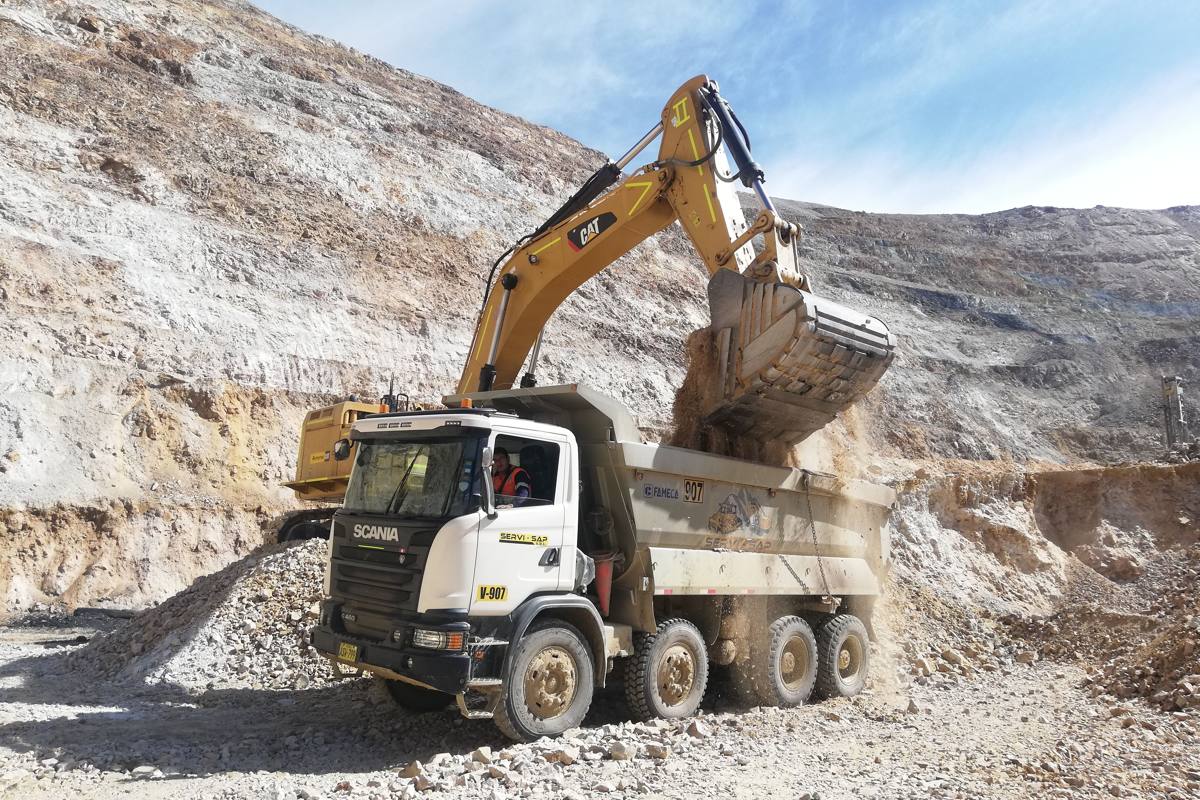
The South African mining sector has made its intentions clear, its future lies in mechanisation of systems and streamlined production for a reduction in manpower, more efficient operations and increased production. “Perhaps the most under-rated aspect of mechanisation is the improvement in consistency. A mechanised solution may not be as fast as the best manual operators, but it is the same every single time, which greatly improves the consistency of the operation, which in turn improves productivity,” says Dr Declan Vogt, director of the Centre for Mechanised Mining Systems at Wits University. Mechanisation may not be feasible on every operation, however, and there is no one-size-fits-all method.
Upskilling for Industry 4.0
While companies generally assume the responsibility for providing job-relevant training for their employees, there is a gross mismatch between 21st century jobs and 20th century skills. Vogt believes that the primary challenge of implementing mechanised systems in the South African operating environment is skills. “It is not enough to buy a good machine and throw it over the wall into your operation. Everyone, from operator to manager, needs to understand the need for the machine, what it can deliver and why it should be supported,” he says. Fundamentals are and will always be important. “We have to co-create a better future for mine and community sustainability,” says Cawood.
Towards the Mine of the Future and Industry 4.0
Research suggests 200 000 jobs lost by 2025 could indirectly affect 2 million people. Experts predict that without a shift toward modern, mechanised 24/7 mining solutions in line with Industry 4.0 trend, South Africa’s mining industry could lose its mineral resources, and experience accelerated and premature mine closures. In the end, though, when it comes to Industry 4.0 mines have little choice – they need to improve their productivity or go out of business. Some mines will adapt quickly, others will take longer, and for some mechanisation is not an option. Overall though, we’ll see more mechanisation and wonder why we didn’t do it sooner.